Table of Contents

Large trees give a property shade, privacy, and presence, but they can also reach into the places where you walk, park, and drive. Low branches scrape car roofs, overhanging limbs drop debris on steps, and heavy growth can block the path that plows, delivery trucks, and emergency vehicles need. In winter the problem gets worse, because snow and ice add weight and reduce visibility. A reliable tree trimming service can keep branches where they belong, and good planning helps you avoid hazards before they cause damage. This guide explains how tree trimming Buffalo NY homeowners schedule in the colder months can keep driveways and walkways safe, open, and easy to use.
Why Clearance Matters More Than You Think
It is easy to ignore a branch that hangs a little low until it hits something. Keeping trees trimmed back from the places people use every day matters for several reasons:
- Safety for people walking on paths, steps, and driveways
- Protection for vehicles from scratches, dents, and falling limbs
- Clear access for snow plows, garbage trucks, and emergency responders
- Better visibility when backing out of a driveway or turning onto a street
- Less debris, sap, and bird droppings landing on cars and walkways
- A neater look that supports curb appeal
A branch that seems harmless in summer can become a real hazard once it is loaded with wet snow or coated in ice.
How Winter Changes the Risk
Buffalo winters are known for heavy lake-effect snow, freezing rain, and strong winds. All three put extra stress on branches that overhang driveways and walkways. Consider what happens during a typical storm:
- Wet snow can add many pounds to a single limb
- Ice coats branches and makes them stiff and brittle
- Wind whips loaded branches back and forth, increasing the chance of breakage
- Branches bowed down by snow can drop into the path of cars and pedestrians
- Falling limbs can damage cars, roofs, fences, and people
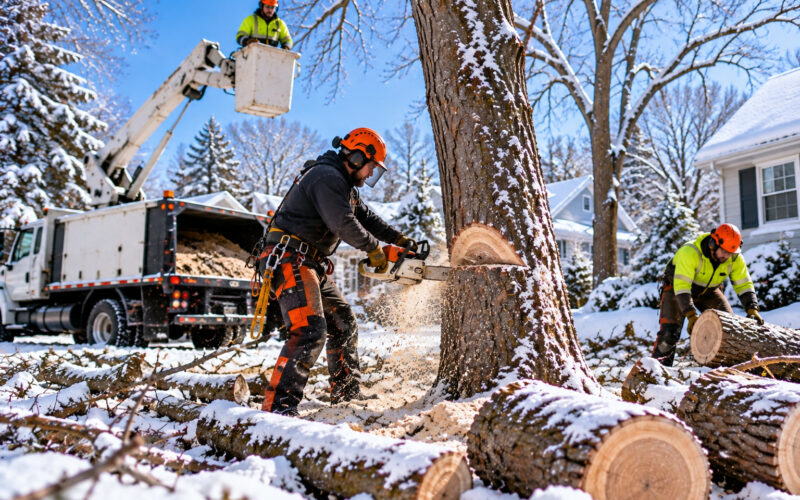
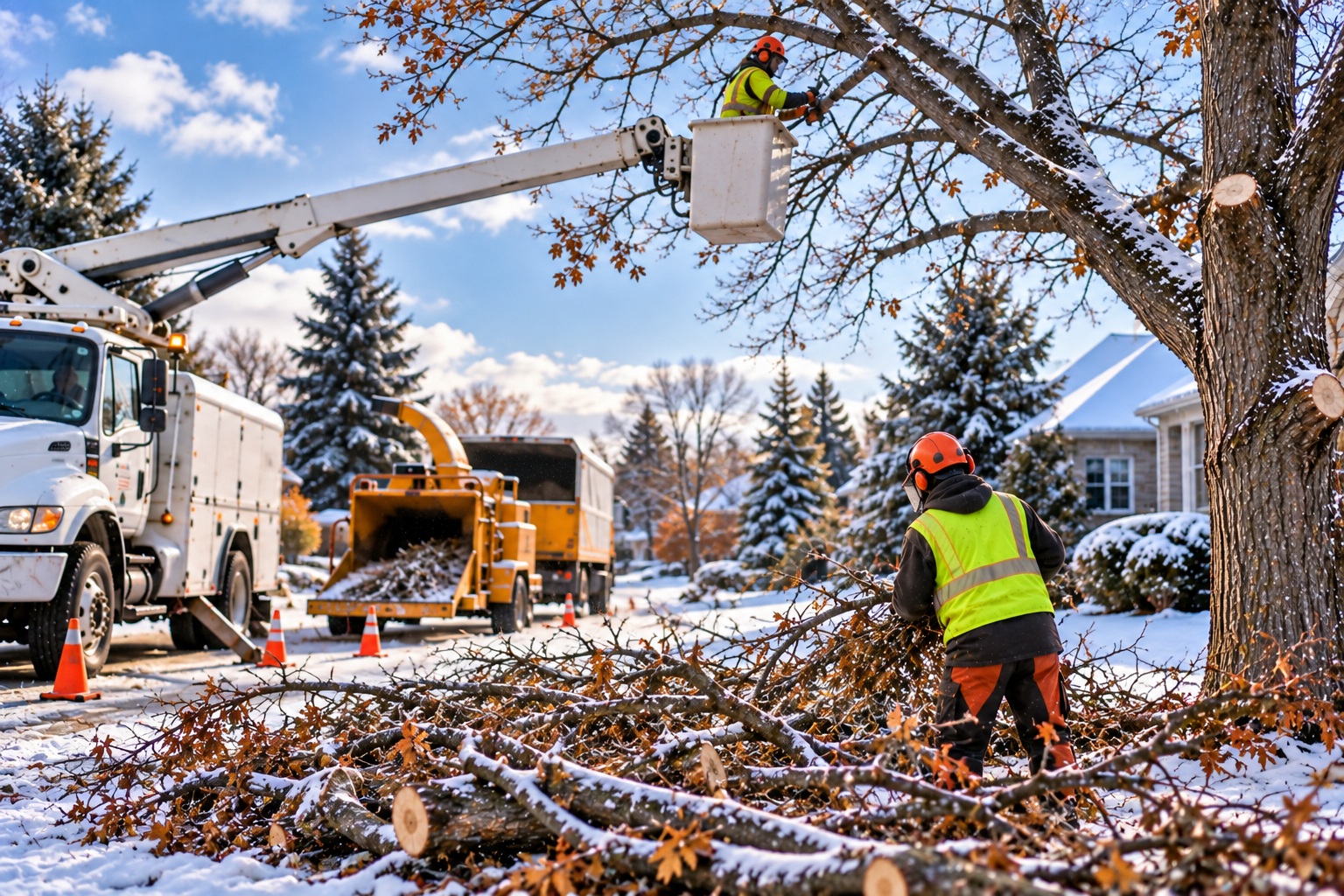
Working with a tree trimming service before the heavy weather arrives is one of the simplest ways to reduce these risks. Removing weak or overextended branches ahead of time means fewer surprises when a storm hits.
Understanding Recommended Clearance
Professionals often use general clearance guidelines when planning work near driveways and walkways. These are not strict rules for every property, but they offer a useful starting point:
- Walkways and sidewalks usually benefit from about eight feet of overhead clearance
- Driveways and areas where vehicles travel often need twelve to fourteen feet
- Roads and areas used by large trucks or plows may need even more
- Roofs, gutters, and siding should have clear space so branches do not rub or scrape
Local ordinances can also set requirements for branches that extend over public sidewalks or streets, so it helps to check with your municipality. A professional crew familiar with the area can help you meet both safety needs and local rules.
Signs Your Trees Need Attention
You do not need to wait for something to break before acting. Watch for these signs that it may be time to schedule tree trimming Buffalo NY properties often need before winter:
- Branches that brush the roof of your car or scrape the garage
- Limbs hanging over steps, porches, or main walkways
- Branches that block the view when you pull out of the driveway
- Heavy growth that sags toward the ground after rain or snow
- Dead or cracked branches above areas where people travel
- Branches rubbing against the house, gutters, or fence
- Leaves, twigs, or sap that constantly collect on pavement
If you notice more than one of these, a professional assessment will tell you which branches should go first.
Why Winter Is a Good Time to Trim
Late fall and winter can be an excellent window for this kind of work. Once the leaves drop, the structure of a large tree is easy to see. Crews can spot dead wood, weak unions, and crossing branches more clearly. Other benefits include:
- Less stress on many species while they are dormant
- Firmer ground for equipment, which helps protect the lawn
- More flexible scheduling before the busy spring season
- Time to correct problems before the next round of storms
- Lower chance of spreading certain insects and diseases in cold weather
Timing still depends on the species, because some trees bleed sap if cut at certain times and some flowering varieties can lose blooms. A qualified tree trimming service can recommend the right timing for each tree on your property.
Techniques Used on Large Trees
Large trees call for careful technique. The goal is to create clearance without harming the tree. Common methods include:
- Crown raising, which removes lower branches to lift the canopy above walkways and driveways
- Crown thinning, which selectively removes branches to reduce weight and let wind pass through
- Crown reduction, which shortens branches back to healthy side limbs to lower overall spread
- Deadwooding, which removes dead or dying limbs that could fall
- Selective pruning of branches that rub against structures
Good crews make clean cuts just outside the branch collar, avoid leaving stubs, and limit how much they remove at once. A common guideline is not to take more than about a quarter of the live canopy in a single season. Trees that need major correction can be handled over two or three visits.
Why Topping Is the Wrong Answer
Some people try to keep a large tree out of the way by cutting off the top or chopping branches back to stubs. This practice, called topping, is widely considered harmful. It leaves large wounds that decay, triggers weak, fast-growing shoots, and often makes a tree more dangerous over time. If a provider suggests topping, ask about alternatives. A trustworthy tree trimming service will explain safer ways to reduce size or increase clearance.
Working Near Power Lines and Roofs
Large trees near driveways often grow close to utility lines or the roofline of the house. These areas add risk and require extra care. Keep these points in mind:
- Never trim branches that touch or come close to power lines yourself
- Contact your utility company for lines near the tree, since qualified line-clearance workers handle that work
- Use caution when large limbs hang over the roof, since they can cause serious damage if they fall
- Allow crews to lower heavy branches with ropes rather than dropping them
For work near wires, homes, or vehicles, professional tree trimming Buffalo NY crews have the training, equipment, and insurance to do the job safely.
Roots and Surface Damage
Branches are not the only issue near driveways and walkways. Roots can lift pavement, crack concrete, and create tripping hazards. While trimming does not fix root problems, a tree trimming service can spot early warning signs, such as heaved slabs or exposed surface roots, and recommend a plan. Options may include root pruning, adjusting the surface, or in some cases removing a tree that is causing serious or repeated damage.
Preparing for Your Appointment
A little preparation helps your tree trimming Buffalo NY appointment go smoothly:
- Move vehicles away from the work area
- Clear snow from the path crews will use to reach the tree
- Point out the branches or areas that concern you most
- Let the crew know about buried lines, sprinklers, or fences nearby
- Keep children and pets indoors while work is under way
Telling neighbors about the work can also help if branches extend over shared driveways or property lines.
Understanding the Cost
Several factors influence the price of trimming large trees:
- Height and canopy spread
- Number of trees and amount of work needed
- Access for trucks, lifts, and chippers
- Proximity to wires, structures, and vehicles
- Whether clean-up and haul-away are included
- Time of year and current demand
Large trees near driveways may take longer because crews have to protect cars, pavement, and property while working. Ask the tree trimming service for a written estimate that clearly lists what is included. Booking before storm season can help you secure a convenient date and avoid emergency rates after a major storm.
Choosing the Right Provider
Look for a company that is licensed and insured and willing to explain its approach. A good tree trimming service will inspect your property, discuss your goals, and give you a clear plan before cutting begins. Ask about experience with large trees, how the crew protects lawns and pavement, and how clean-up is handled. Reading reviews from local customers can help you find a dependable provider of tree trimming Buffalo NY residents recommend. Be cautious of anyone who pressures you to decide quickly or offers to top trees.
Highland Tree Service provides tree trimming Buffalo NY homeowners can book to keep large trees clear of driveways and walkways, with written estimates and a plan explained before work begins.
Frequently Asked Questions
How much clearance should I keep over a driveway? Many professionals suggest twelve to fourteen feet for areas where vehicles travel, and about eight feet over walkways. Local rules and the size of your vehicles may call for more.
Is it safe to trim large branches myself? Small branches within easy reach may be manageable with proper tools. Large limbs, work at height, and anything near power lines should be left to trained crews.
Can I trim in the middle of winter? In many cases yes, especially for dormant trees. Icy conditions can make work more hazardous, so crews choose their timing carefully.
Will trimming harm my tree? Proper pruning supports tree health. Harm usually comes from poor technique, such as topping or removing too much at once.
How often should large trees be trimmed? Many mature trees benefit from an inspection every year or two and trimming as needed, often every three to five years, depending on species and growth rate.
Who is responsible for branches hanging over a sidewalk? In many places, property owners are responsible for keeping their trees from blocking sidewalks and streets. Check local ordinances or ask a professional for guidance.
What should I do if a branch falls across my driveway? Stay clear of any wires, avoid moving large limbs yourself, and call a professional for safe removal.
Final Thoughts
Keeping large trees clear of driveways and walkways makes your property safer and easier to use all year, and it matters most when winter weather arrives. Regular inspections, thoughtful pruning, and the right timing can prevent damage to vehicles, protect people, and keep access open for plows and emergency vehicles. With help from a trusted tree trimming service, you can enjoy the beauty of your large trees without the headaches they can cause.